
Updated August 11, 2026
As my kids got older, they became more interested in learning to cook. I was happy about that—but honestly, I was also a little lost. My mom did not really teach me to cook, and I did not learn to do it for myself until after I was married. Our first few family cooking sessions were bumpy.
With practice, the kids became more comfortable and genuinely helpful in the kitchen. The biggest lesson I learned was that teaching a child to cook is not about completing a perfect recipe. It is about choosing one safe, manageable skill and building from there.

Why cooking is a valuable skill for kids
Cooking gives children a practical way to practise reading, sequencing, measuring and fractions. It also lets them explore unfamiliar foods without pressure. The American Academy of Pediatrics notes that cooking together can build positive food experiences and useful life skills when children receive close supervision and tasks suited to their abilities.
Children do not need to prepare a whole meal to benefit. Washing produce, tearing lettuce or measuring an ingredient is real participation. Small successes build the confidence needed for more complicated jobs later.
Start with supervision and readiness—not age alone
Age ranges can help you choose a starting point, but they are not permission slips. Children develop coordination, attention and judgment at different rates. Stay beside your child, demonstrate each new skill, and step in whenever a task involves a sharp tool, heat, electricity or raw animal products.
A child who is tired, distracted, upset or rushing may need an easier job that day. A stable step stool, good lighting and a clear workspace also matter.
Kitchen safety rules to teach first
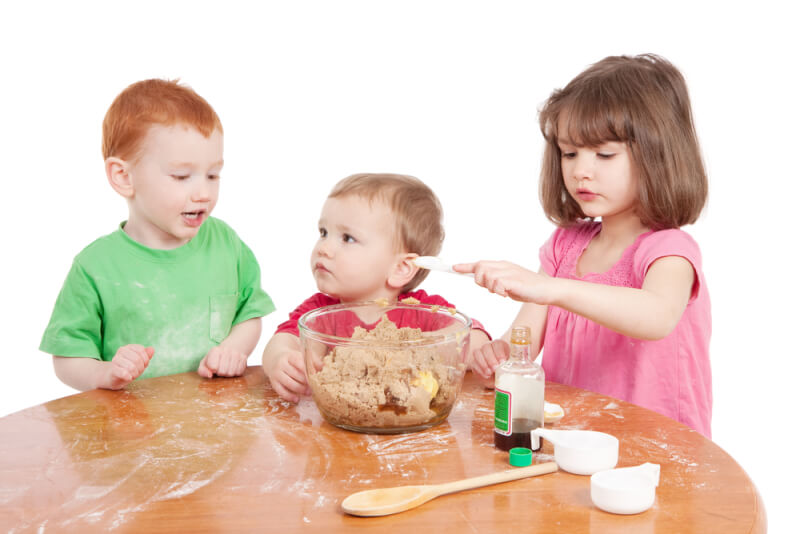
Review the rules before you take out the ingredients. Keep the list short enough for your child to remember:
- Wash hands for at least 20 seconds. Wash again after touching raw meat, poultry, seafood or eggs, after using the bathroom, after touching pets and after handling garbage.
- Keep raw foods separate. Use different cutting boards and utensils for raw meat and ready-to-eat food. The federal Clean, Separate, Cook and Chill guidance is an easy framework for the whole family.
- Do not taste raw dough or batter. Raw flour and uncooked eggs can contain germs. For young children, an adult should take the lead on handling raw meat, poultry, seafood and eggs.
- Ask before touching a knife, appliance or hot surface. A child should never turn on the stove, oven, microwave, mixer or food processor without an adult’s permission and close supervision.
- Protect against burns. Turn pot handles toward the back of the stove, use dry oven mitts and keep hot food and liquids away from counter edges. The AAP’s family kitchen-safety checklist has more ways to reduce common hazards.
- Make the work area safe. Tie back long hair, secure loose sleeves, wipe up spills promptly and keep electrical cords out of reach.
- Check allergies before choosing a recipe. Read every ingredient label and prevent cross-contact when someone in the family has a food allergy.
Children younger than five are more vulnerable to serious foodborne illness. The CDC’s safer-food guidance for children under five explains which foods require extra care.
Cooking skills by age and ability
Use these groups as flexible examples. The right job is one your child can do safely while following directions and staying focused.
Ages 2 to 4: explore and help
- Wash produce in a bowl or under running water with help.
- Tear lettuce or herbs and break a banana into pieces.
- Pour pre-measured ingredients into a large bowl.
- Stir cool ingredients with a spoon.
- Count ingredients, name colours and help set the table.
Keep sharp tools, raw animal products and hot equipment out of reach. At this stage, the goal is a positive, closely supervised experience.
Ages 5 to 7: measure and assemble
- Measure dry ingredients over a tray.
- Mash soft foods with a fork or potato masher.
- Whisk cool ingredients in a stable bowl.
- Spread soft ingredients with a dull table knife.
- Follow a two- or three-step picture recipe with an adult.
Ages 8 to 10: follow a simple recipe
- Read the ingredient list and gather equipment.
- Use a child-safe knife on soft foods after a demonstration.
- Grate, peel or open cans with close supervision.
- Learn how to use a food thermometer with an adult.
- Use the microwave or stovetop only while an adult stays beside them.
Ages 11 and older: build independence gradually
- Plan and prepare a simple meal with supervision.
- Practise safe chef’s-knife skills and stable cutting-board setup.
- Use the oven and stovetop after demonstrating safe habits.
- Learn safe internal cooking temperatures and how to store leftovers promptly.
- Clean the work area and put equipment away.
Older does not automatically mean ready. Continue supervising until your child consistently follows the safety rules and can respond calmly when something spills, burns or goes wrong.
How to teach kids to cook, step by step
- Choose one simple recipe together. Children are more invested when they help make the decision. A photo-based children’s cookbook can make the choice easier. Selena’s roundup of fun children’s cookbooks is still a useful place to look for ideas.
- Read the entire recipe before starting. Find unfamiliar words, check the cooking time and make sure you have every ingredient.
- Prepare the workspace. Wash hands, clear the counter, gather equipment and place ingredients in the order you will use them.
- Demonstrate one new skill. Show the movement slowly, explain the safety rule, and then let your child try while you remain close.
- Give one direction at a time. Too many instructions can turn a fun lesson into frustration.
- Allow extra time and some mess. Choose a day when nobody needs to rush. Keep a damp cloth nearby and treat cleanup as part of cooking.
- Review the result. Ask what went well, what was difficult and what your child wants to make next time.
Easy first recipes for kids
Look for short recipes with familiar ingredients and only one new skill. Good starting ideas include:
- Fruit and yogurt parfaits
- Sandwiches, wraps or pinwheels
- Overnight oats
- Simple salads
- Banana muffins
- Pancakes with an adult managing the hot pan
- Sheet-pan vegetables with an adult handling the oven
Browse the TOTSFamily Recipe Index together and let your child shortlist two or three manageable options.
Helping children who are distractible or sensory-sensitive
Some children do best with a quieter, more predictable cooking lesson. Try a visual checklist, one-step directions and a clearly marked place to put hands when they need to stop. Let a child who dislikes sticky textures use a spoon or food-safe gloves, and avoid introducing a sharp tool and a hot appliance in the same lesson.
A timer can help with waiting, but it does not replace an adult. If focus slips, pause the task and switch to something safer such as reading the next step, setting the table or washing a bowl.
Frequently asked questions
What is the best age to teach a child to cook?
Children can begin helping as toddlers, but the task should match their coordination, attention and judgment. The AAP advises parents to consider a child’s abilities and developmental stage and to supervise all cooking activities. Rinsing produce may be appropriate long before using a knife or stove.
How should I introduce knife skills?
Begin with a child-safe knife and soft food on a nonslip cutting board. Demonstrate where fingers go, keep your hand close enough to intervene and end the lesson if your child stops following directions. Move to sharper knives only after safe habits are consistent.
What if my child does not want to cook?
Do not force the full recipe. Offer a small choice—washing fruit, measuring flour or setting the table—and invite them again another day. Watching, smelling ingredients or choosing the recipe can be useful participation too.
Keep the first lessons simple
The best way to teach kids to cook is to make safety predictable, keep each job manageable and let confidence grow through repetition. Pick an unrushed day, make one simple recipe and celebrate the effort rather than the appearance of the finished food.
Have you taught your kids to cook? Share the first recipe or kitchen skill that worked well for your family in the comments.


