
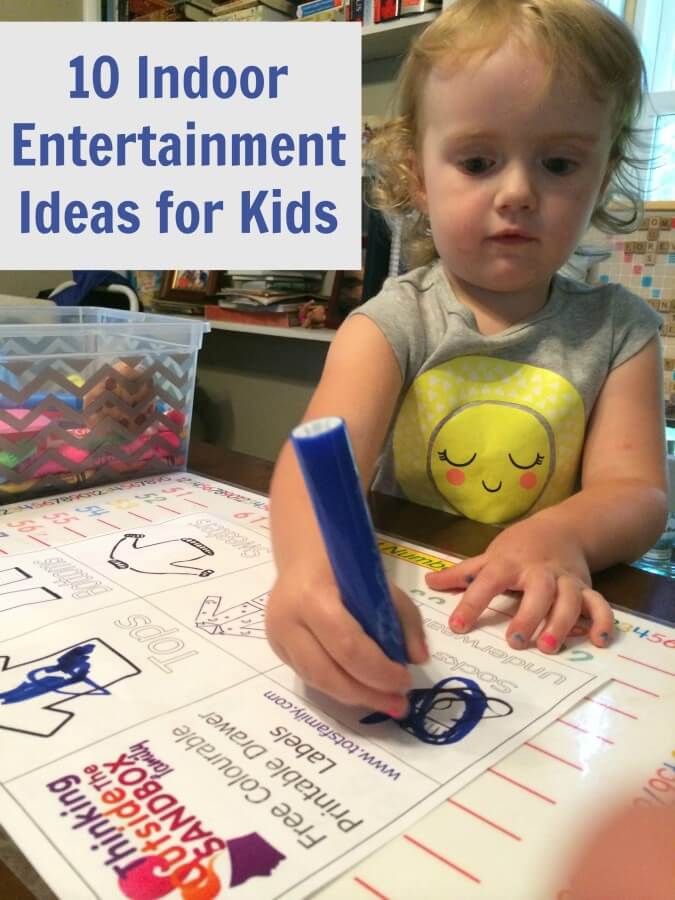
Save or print this indoor-activity checklist for the next rainy, snowy, or extra-busy day.
By Tessa · Published March 28, 2018 · Updated August 11, 2026
Good indoor activities for kids do not need a large playroom, expensive supplies, or hours of preparation. A small collection of open-ended materials, a little floor space, and a clear start-and-cleanup routine can turn an ordinary afternoon into something children enjoy.
The ideas below work in apartments and small homes, and most can be adjusted for toddlers, school-age children, or mixed-age siblings. Choose two or three options rather than setting out everything at once. Fewer choices often make it easier for children to begin.
Before You Start: Make the Space Safer
- Clear walking paths and move breakable items before active play.
- Supervise scissors, small craft pieces, cooking tools, hot surfaces, and foods that may be choking hazards.
- Keep forts away from heaters, lamps, cords, and open flames. The U.S. Fire Administration advises children never to touch matches, lighters, or candles; use battery-operated lights for indoor camping instead.
- Match each activity to the child’s age, skills, sensory needs, and attention span.
For children ages 6 to 17, active indoor play can also contribute to the CDC recommendation of at least 60 minutes of daily physical activity. Preschool children benefit from being active throughout the day.
1. Set Up an Open-Ended Art Tray
Place a few washable, age-appropriate supplies on a tray or baking sheet so the activity has a clear boundary. Paper, crayons, tape, stickers, cardboard tubes, paper plates, and glue sticks can become animals, vehicles, masks, signs, or whatever the child imagines.
- For toddlers: use large crayons, chunky stickers, and one sheet of paper at a time.
- For older children: add a design prompt such as “Build something that can stand on its own.”
- For easier cleanup: cover the table, limit paint colours, and keep a damp cloth nearby.
You do not need to plan a finished product. The value is in making choices, testing ideas, and creating independently.
2. Cook One Simple Recipe Together
Cooking gives children a real job with a visible result. Choose a short recipe and assign tasks by readiness: gathering ingredients, washing produce, counting scoops, stirring, reading directions, setting a timer, or wiping the counter.
Our guide to teaching kids to cook explains how to match kitchen tasks to a child’s skills and includes food-safety reminders. For a movie-day snack, try homemade caramel popcorn with an adult handling all hot sugar and stovetop steps.
3. Rotate Books, Puzzles, and Activity Pages
Bring out a small basket of books, puzzles, colouring pages, or reusable activity sheets that have been out of sight for a while. The materials do not need to be new; rotating what children can see often makes familiar items feel interesting again.
Invite children to choose a theme—dinosaurs, space, animals, vehicles, or a favourite story—and gather a few related items. Older children can make a mini quiz, comic strip, or “fact of the day” page for younger siblings.
4. Build a Living-Room Movement Circuit
Create four or five stations using safe actions that fit your space. Try marching in place, animal walks, tossing rolled socks into a basket, stepping over a line of painter’s tape, balancing on one foot, or doing a short dance.
- Keep the route away from stairs and furniture corners.
- Use cushions only on a clear floor; do not encourage climbing on furniture.
- Let each child invent one station or choose the music.
Run the circuit for five minutes, take a water break, and repeat if everyone is still having fun.
5. Start a Card or Board-Game Tournament
A standard deck of cards offers many low-cost options: Go Fish, War, Crazy Eights, matching games, simple Solitaire, or building card houses. Use cooperative games when competition is likely to cause frustration, or let children work together to beat a family best time.
Adjust the rules for mixed ages. Younger children can match colours or numbers while older children keep score, explain turns, or create a new variation.
6. Make Screen Time Shared and Purposeful
A movie, nature video, drawing tutorial, or family-friendly game can be part of a balanced indoor day. Choose age-appropriate content, watch or play together when possible, and decide before starting what happens when it ends.
The American Academy of Pediatrics recommends creating a family media plan that leaves room for sleep, movement, reading, hobbies, and face-to-face time. After the screen goes off, extend the idea: draw a favourite scene, act out an ending, build something from the story, or make a snack together.
7. Put On a Play, Puppet Show, or Radio Story
Choose a familiar story or invent a simple beginning, problem, and ending. Children can perform, narrate, make paper-bag puppets, design tickets, or create sound effects with household objects.
Children who do not want to be on stage can be the director, set designer, announcer, or audience. Recording is optional; the activity still works when the performance exists only for the people in the room.
8. Try a Building or Science Challenge
Give children a small collection of safe materials and one clear challenge. Examples include:
- Build the tallest tower from cups or blocks.
- Create a bridge that can hold a toy car.
- Make a paper airplane and test one design change at a time.
- Sort household objects by material, texture, shape, or whether they roll.
- Design a marble path using cardboard tubes, with close supervision around small objects.
Ask “What do you notice?” and “What would you change?” instead of rushing to provide the answer.
9. Plan an Indoor Camping Night
Build a blanket fort or place sleeping bags on the living-room floor. Add story time, a picnic-style dinner, shadow puppets with a flashlight, and a family playlist.
Skip candles and any other open flame. Use flashlights or battery-operated lanterns, keep fabric away from heaters and lamps, and make sure everyone has a clear path out of the room. If you want s’mores, prepare them safely in the kitchen with an adult rather than inside the fort.
10. Create a Quiet-Choice Basket
Not every indoor activity needs to be energetic or shared. Fill a basket with a few calm options such as drawing paper, audiobooks, sensory-friendly fidgets, lacing cards, puzzles, building pieces, or a notebook.
A quiet choice can help when siblings need a break from one another or when a child feels overstimulated. Do not use the basket as a punishment; present it as another valid way to spend time.
A Simple Indoor-Day Plan
If the day feels long, use a three-part rhythm:
- Move: choose the movement circuit or a dance break.
- Make: pick art, cooking, building, or a play.
- Reset: finish with books, a puzzle, or the quiet-choice basket.
Keep the plan flexible and stop while the activity is still going well. Children do not need constant entertainment; a few inviting options and permission to be creative can be enough.
For more seasonal inspiration, see these summer fun activities for kids and adapt the ones that work indoors.


